By admin
April 12, 2026
Deepfake/AI Voice Scam
Learn how deepfake and AI voice scams work, identify warning signs, and discover essential tips to protect yourself and your loved ones from sophisticated audio fraud.
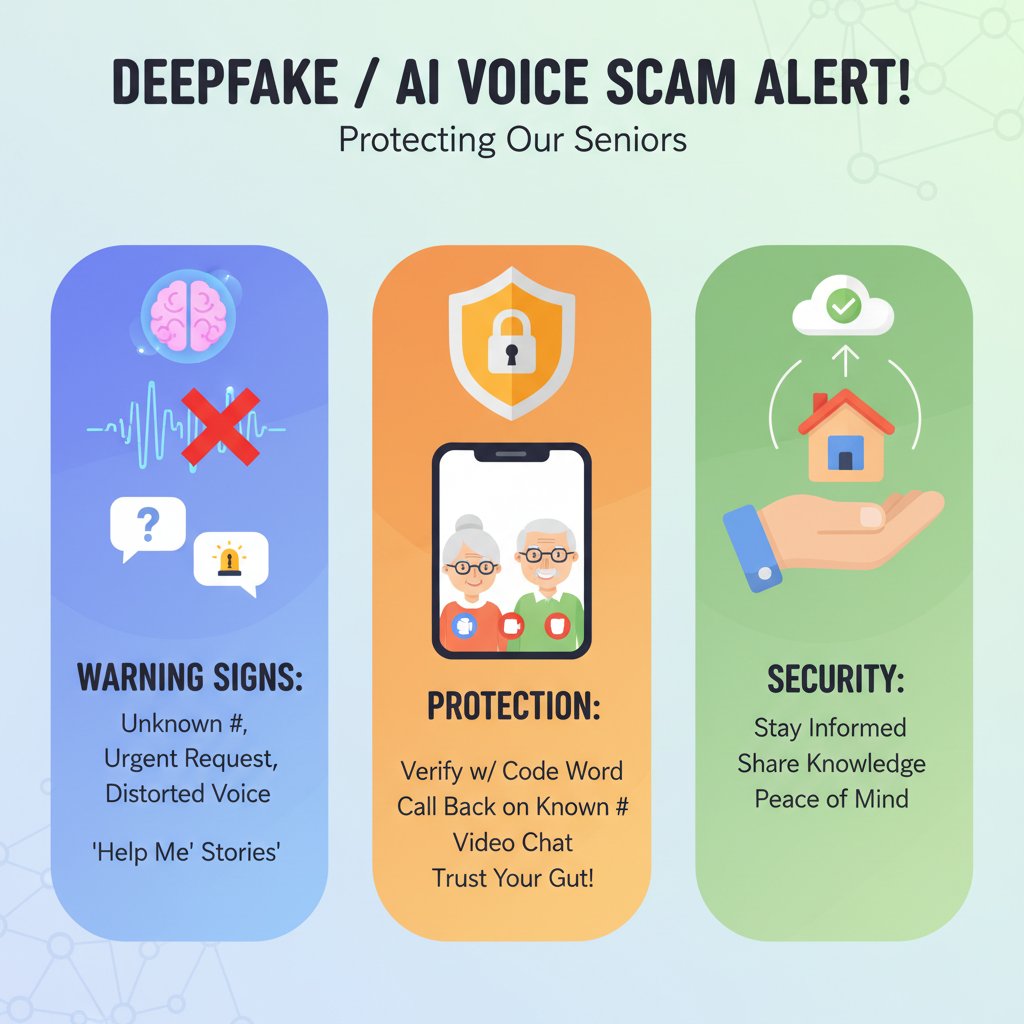
Don't Fall for the Voice You Know: Understanding and Protecting Yourself from Deepfake/AI Voice Scams
In an increasingly digital world, the familiar comfort of a loved one's voice can be a powerful thing. But what if that voice, so recognizable and reassuring, was actually a sophisticated trick designed to steal your money or personal information? Welcome to the unsettling reality of deepfake and AI voice scams, a growing threat that preys on trust and emotion.
As expert healthcare writers dedicated to senior scam awareness, we want to equip you with the knowledge and tools to protect yourself and your loved ones from this insidious form of fraud. This comprehensive guide will break down what these scams are, how they work, and most importantly, how you can stay safe.
What is a Deepfake/AI Voice Scam?
Imagine getting a phone call from your grandchild, your son, or even a close friend. Their voice sounds exactly right – the tone, the pitch, the familiar way they speak. But the words they're saying are alarming: "Grandma, I'm in trouble! I need money right away, and I can't talk about it." This, in essence, is the core of a deepfake or AI voice scam.
Deepfake technology, originally known for manipulating video, has advanced rapidly to include audio. AI voice technology (Artificial Intelligence) can now mimic a person's voice with astonishing accuracy, using just a small sample of their actual speech. Scammers use these powerful tools to generate convincing audio that sounds identical to someone you know and trust.
The scammer isn't actually speaking to you; they're playing a computer-generated voice that sounds like your loved one. This technology is becoming so sophisticated that it can even replicate accents, speech patterns, and emotional inflections, making it incredibly difficult to distinguish from the real thing.
How Does This Scam Typically Work?
Deepfake/AI voice scams are built on urgency, emotion, and deception. Here's a typical breakdown of how these fraudsters operate:
-
Gathering Voice Samples: The first step for a scammer is to get a sample of your loved one's voice. This is often easier than you might think. Social media platforms (like Facebook, Instagram, TikTok), YouTube videos, news reports, podcasts, or even voicemails can provide enough audio for AI to "learn" a voice. Many people share short videos or voice notes online without realizing the potential risk.
-
Crafting a Crisis Story: Once they have the voice, scammers create a compelling and urgent scenario designed to elicit an immediate emotional response. Common storylines include:
- Emergency Abroad: "I'm traveling and lost my wallet/passport, I need money to get home!"
- Legal Trouble: "I've been arrested and need bail money, don't tell Mom/Dad!"
- Medical Emergency: "I'm in the hospital and need money for urgent treatment!"
- Car Trouble/Accident: "I've been in an accident and need money for repairs or to avoid legal issues."
- Financial Distress: "I'm about to be evicted/lose my job if I don't pay this bill immediately."
-
The Urgent Call: You receive a call, often from an unfamiliar number (which they might explain away as a new phone, a borrowed phone, or a phone from someone who helped them). The voice on the other end sounds exactly like your loved one, conveying panic, distress, or extreme urgency. They will often add details that make it seem more legitimate, like mentioning a specific event or person you both know.
-
Demanding Immediate Payment: The scammer will insist that money is needed right now and that you cannot tell anyone else, especially other family members. They'll often push for payment methods that are difficult to trace, such as:
- Gift Cards: They'll ask you to buy gift cards (like Apple, Google Play, Amazon, or even specific retail stores) and then read the codes over the phone.
- Wire Transfers: Money sent via services like Western Union or MoneyGram is almost impossible to recover once sent.
- Cryptocurrency: They might guide you through setting up a crypto wallet and sending funds.
- Cash in the Mail: Less common, but some might even ask you to mail cash.
-
Pressure and Isolation: The scammer will maintain pressure, keeping you on the phone, preventing you from calling anyone else, and emphasizing the dire consequences if you don't act immediately. They count on your love and concern to override your skepticism.
Warning Signs
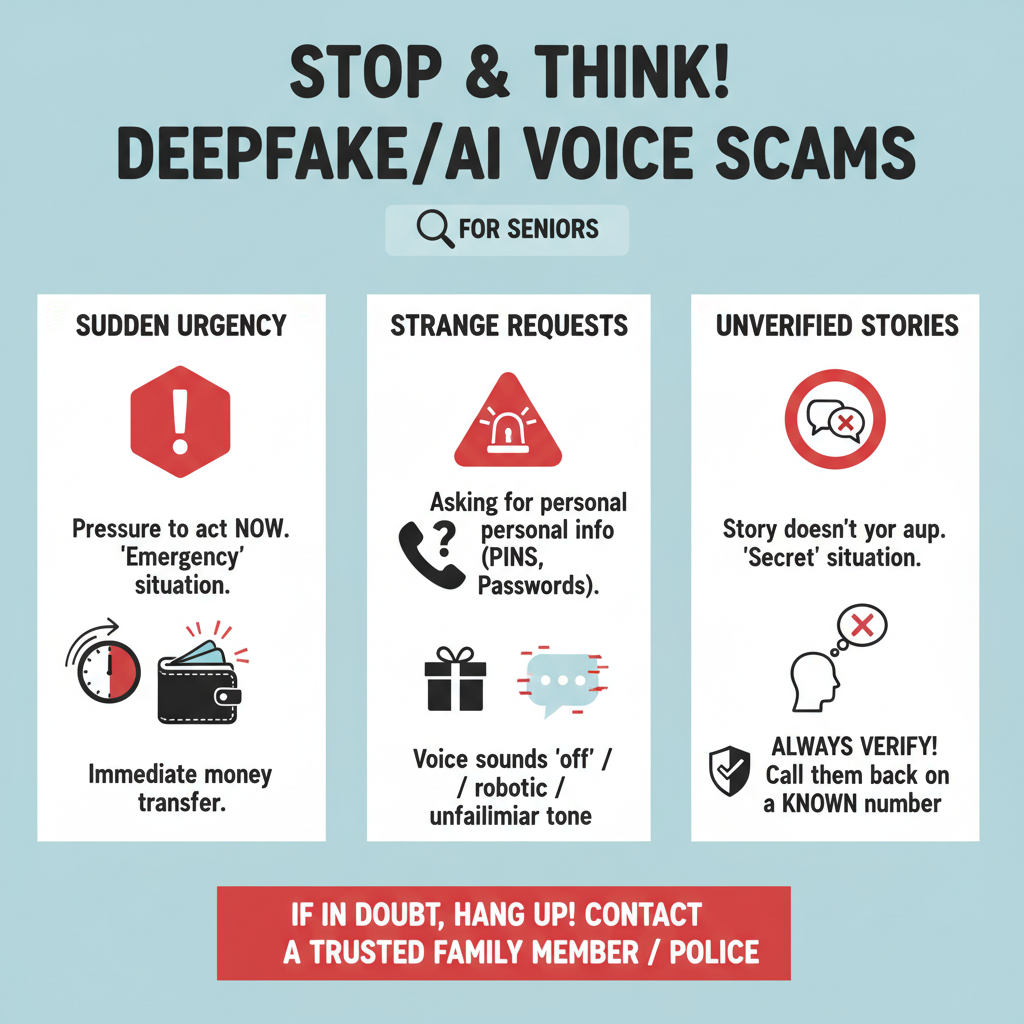
Recognizing these red flags is your first line of defense. Pay close attention if you encounter any of these situations:
- Urgency and Secrecy: The caller insists on immediate action and tells you not to tell anyone else, especially other family members. This is a classic scammer tactic to isolate you and prevent you from verifying the story.
- Unusual Payment Methods: Any request for gift cards, wire transfers, cryptocurrency, or cash in the mail should immediately raise a huge red flag. Legitimate institutions and individuals rarely ask for payment this way, especially for emergencies.
- Unfamiliar Phone Number: While they might have an excuse for calling from a different number, it's a reason to be cautious.
- Vague Details or Evasiveness: If you ask specific questions about the situation that only your loved one would know, and the caller gives vague answers, changes the subject, or gets agitated, be suspicious.
- Emotional Manipulation: The caller uses strong emotional language to pressure you, playing on your love, fear, or concern.
- Difficulty Reaching the "Real" Person: If the caller claims your loved one is unreachable (e.g., "their phone died," "they're in jail and can't use their phone"), it's a tactic to prevent you from contacting them directly.
- "Bad Connection" or Strange Pauses: While AI voices are advanced, they can sometimes have slight glitches, robotic tones, or unnatural pauses that a real human voice wouldn't. Listen carefully.
- A Story That Doesn't Quite Add Up: Does the situation seem out of character for your loved one? Does it conflict with what you know about their plans? Trust your gut feeling.
Real-World Examples
To illustrate how cunning these scams can be, consider these plausible scenarios:
- The "Grandchild in Distress" Scam: Mrs. Henderson receives a call. The voice sounds exactly like her grandson, Michael. "Grandma, I'm in so much trouble! I was in a minor car accident, and the police are threatening to arrest me if I don't pay a fine right now. My phone broke in the crash, so I'm using a friend's. Please, Grandma, I need $2,000 for bail, and I can't tell Mom and Dad, they'll be furious!" Mrs. Henderson, panicked by Michael's seemingly desperate plea, rushes to buy gift cards as instructed.
- The "Son in Legal Trouble" Scam: Mr. Davies gets a call from a number he doesn't recognize. The voice on the other end is his son, David. "Dad, I'm in a bind. I was pulled over, and they found something in my car that wasn't mine. I'm at the police station, and I need money for a lawyer immediately, or I'm going to jail. Don't tell Sarah (David's wife) yet, I don't want to worry her." The scammer then puts on an act of being a "public defender" who confirms the story and pressures Mr. Davies to wire $5,000.
- The "Friend's Emergency" Scam: Ms. Chen receives a call from what sounds like her close friend, Susan. "Mary, I'm so sorry to call like this, but I'm stuck in another country. My purse was stolen, and I can't access my bank account. I need $1,500 to get a flight home. Can you please send it to this account? I'll pay you back as soon as I'm home." The voice is so convincing, Ms. Chen doesn't hesitate.
These examples highlight how scammers exploit our natural instinct to help those we care about, especially when they appear to be in urgent need.
Steps to Protect
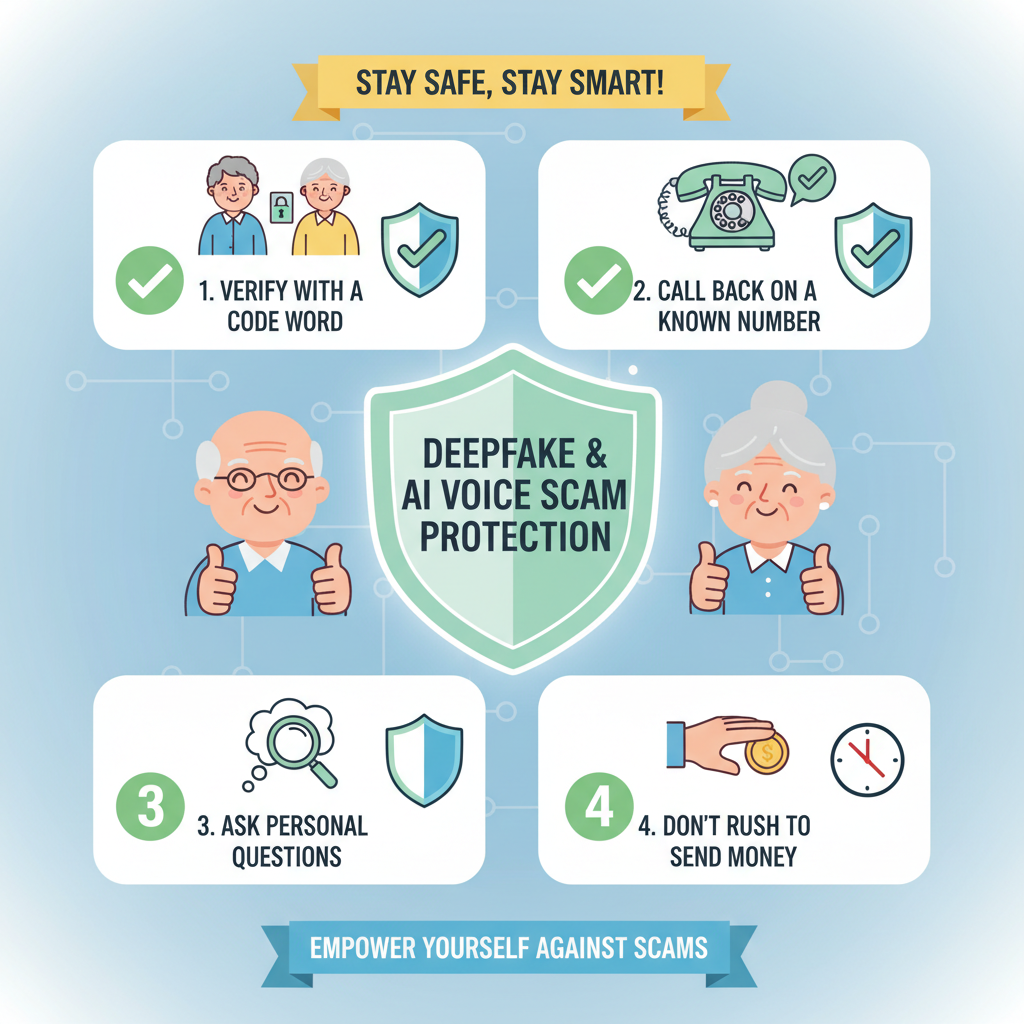
Prevention is always the best medicine. Here's how you can safeguard yourself against deepfake/AI voice scams:
-
Verify, Verify, Verify: This is the golden rule. If you receive an urgent call from a loved one asking for money, never act immediately.
- Call Them Back: Hang up and call the person directly on a number you know is theirs (their cell phone, home phone, or a family member's number). Do not call the number that just called you back, as it will likely go straight to the scammer.
- Use a Code Word: Establish a "secret code word" or a specific question with close family members that only they would know the answer to. If someone calls with an urgent request, ask for the code word.
- Contact Another Family Member: If you can't reach the person directly, call another trusted family member to verify the story.
-
Be Skeptical of Urgent Requests for Money: Any demand for immediate payment, especially through unusual methods (gift cards, wire transfers, crypto), should be treated with extreme suspicion. Legitimate requests for financial help rarely come with such high pressure and secrecy.
-
Limit Public Sharing of Voice Samples: Be mindful of what you and your loved ones share online. While it's hard to avoid entirely, try to limit publicly accessible audio or video clips of your voice or your family members' voices, especially those with unique speech patterns.
-
Educate Your Family: Talk to your children, grandchildren, and other loved ones about these scams. Let them know that if they ever truly need help, they should expect you to verify their identity and situation. Encourage them to be cautious about what they share online.
-
Use Strong Privacy Settings: Review and strengthen the privacy settings on your social media accounts and those of your family members to limit who can access their posts, photos, and videos.
-
Trust Your Gut: If something feels off, it probably is. Don't let emotional pressure override your instincts. It's always better to be safe than sorry.
-
Consider a "Verification Protocol": Discuss with your family a simple protocol for urgent requests. For example, "If I ever call you needing money, I will always text you first from my regular number to let you know I'm calling and why."
What to Do If You've Been Scammed
If you suspect or confirm that you've fallen victim to a deepfake/AI voice scam, it's crucial to act quickly:
-
Stop All Contact: Immediately cease all communication with the scammer. Do not send any more money or provide any further information.
-
Contact Your Bank/Financial Institutions: If you sent money via wire transfer, gift cards, or cryptocurrency, contact your bank or the gift card company immediately. While it's often difficult to recover funds, especially with wire transfers and gift cards, reporting it quickly gives you the best chance. Explain that you've been scammed.
-
Report to Authorities:
- Local Police: File a police report. While local police may not always be able to recover funds, it creates a record and can help in broader investigations.
- Federal Trade Commission (FTC): Report the scam to the FTC at ReportFraud.ftc.gov. The FTC collects these reports and uses them to identify trends and pursue scammers.
- FBI's Internet Crime Complaint Center (IC3): If the scam occurred online or involved internet communication, file a report with IC3 at ic3.gov.
- Your Phone Provider: Inform your phone company about the scam call.
-
Notify Your Family and Friends: Let your loved ones know what happened. This not only helps you process the event but also warns them about the scam, preventing them from falling victim to similar tactics.
-
Monitor Your Accounts: Keep a close eye on your bank accounts, credit card statements, and credit report for any unusual activity. Scammers who get money from you might also try to use your personal information for identity theft.
-
Seek Support: Being scammed can be emotionally distressing. Talk to a trusted family member, friend, or a support group. Remember, you are not alone, and scammers are highly skilled at what they do.
Stay Vigilant, Stay Safe
Deepfake and AI voice scams are a chilling reminder of how technology can be twisted for malicious purposes. However, by understanding how these scams work, recognizing the warning signs, and implementing practical protective measures, you can significantly reduce your risk. Your vigilance and proactive steps are your strongest defenses against these sophisticated fraudsters. Stay informed, stay skeptical, and always verify before you act.
Share This Important Information
Know someone who should read this? Share this article with friends and family on Facebook and Instagram to help protect your community from Deepfake/AI Voice Scam.
Together, we can protect our seniors from scams.
Community Discussion
No comments yet. Be the first to share your thoughts!