By admin
April 11, 2026
Top 5 Senior Scams
Discover the top 5 senior scams targeting the elderly. Learn how to identify and protect yourself or loved ones from common fraud schemes and financial exploitation.
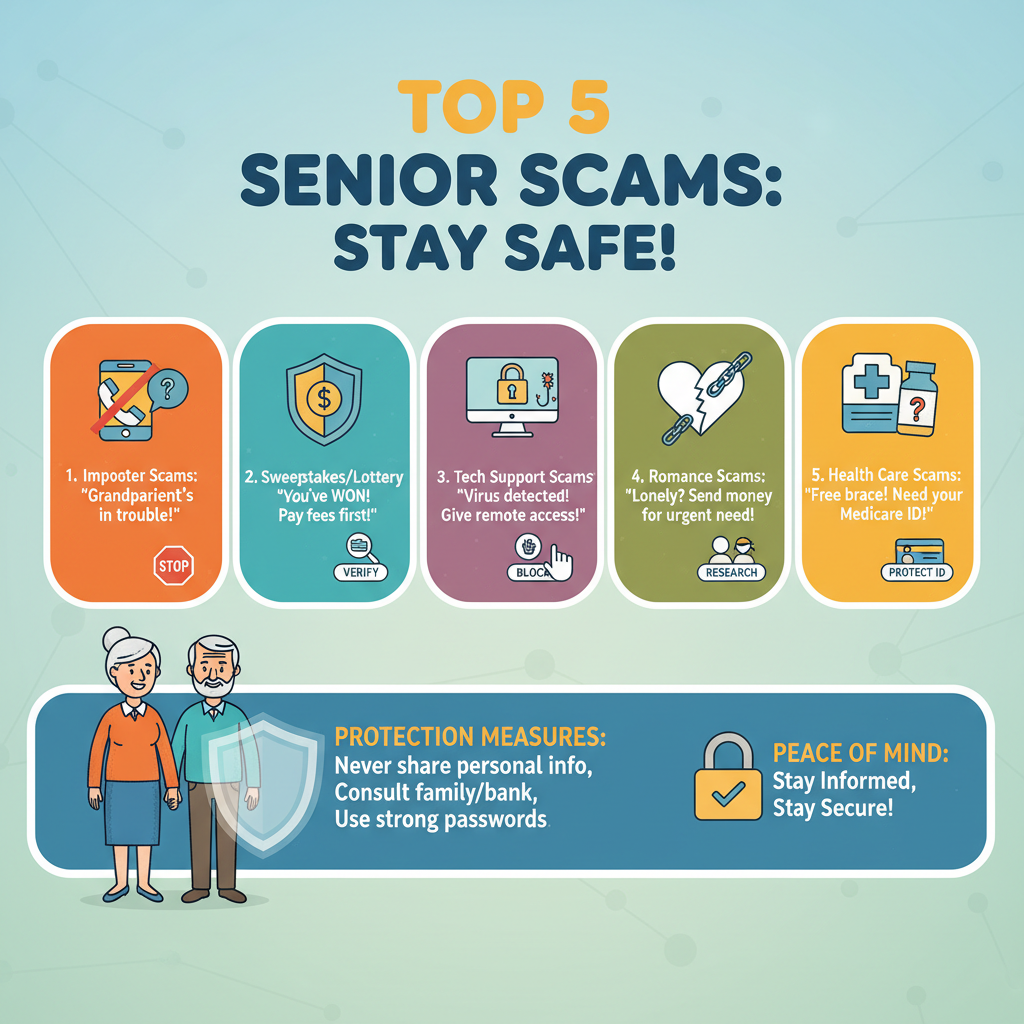
Don't Fall Victim: The Top 5 Scams Targeting Seniors and How to Protect Yourself
(Meta Description: Learn about the top 5 scams targeting seniors, including imposter scams, tech support fraud, grandparent scams, lottery scams, and romance scams. Discover warning signs, real-world examples, and essential protection tips to keep your finances and identity safe.)
As we age, we gain invaluable wisdom and experience. Unfortunately, this wisdom can sometimes be targeted by cunning scammers who prey on trust, kindness, and sometimes, even fear. Seniors are often seen as prime targets due to factors like accumulated savings, good credit, and a generation that grew up with more face-to-face interactions, making them potentially more susceptible to sophisticated digital deceptions.
At SeniorScams.org, we believe that knowledge is your best defense. This comprehensive guide will equip you with the vital information you need to recognize, avoid, and report the most prevalent scams targeting seniors today. We'll break down the "Top 5 Senior Scams," offering clear explanations, warning signs, real-world examples, and actionable steps to protect yourself and your loved ones.
1. Imposter Scams: When Trust is Betrayed
What This Scam Is
Imposter scams involve criminals pretending to be someone they're not to gain your trust and, ultimately, your money or personal information. These imposters can claim to be government officials (like the IRS or Social Security Administration), law enforcement, utility companies, bank representatives, or even family members.
How It Typically Works
The scammer contacts you, often by phone, email, or text, with an urgent and alarming message.
- Government Imposters: They might claim you owe back taxes, have an outstanding warrant, or that your Social Security benefits are at risk. They'll demand immediate payment, often through unusual methods like gift cards, wire transfers, or cryptocurrency, threatening arrest or legal action if you don't comply.
- Utility Imposters: They might threaten to shut off your power or water unless you pay an overdue bill immediately.
- Bank Imposters: They might claim there's suspicious activity on your account and ask for your login details or to transfer money to a "safe" account.
- Family/Friend Imposters (often called "Emergency Scams"): They might pretend to be a grandchild or other relative in distress, needing money for an emergency like bail, medical bills, or travel.
Warning Signs
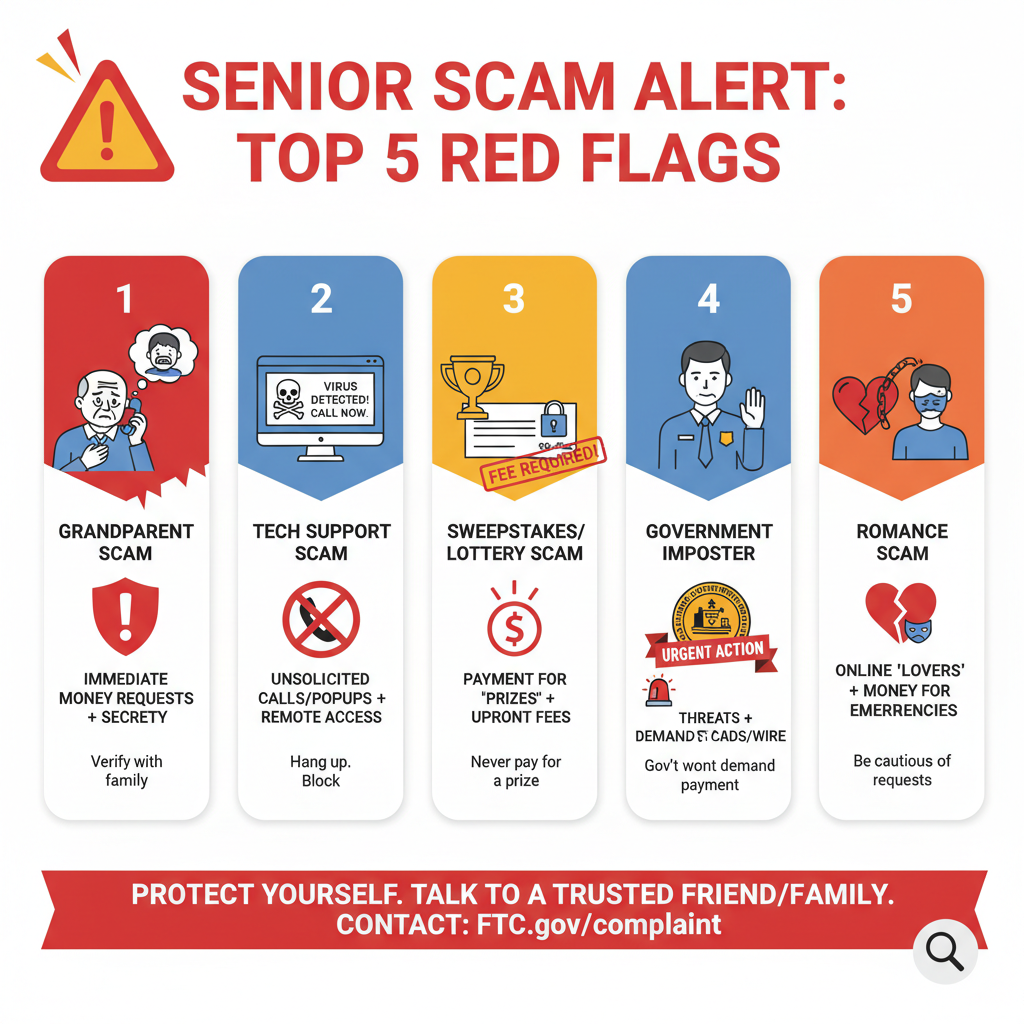
- Urgency and Threats: Any demand for immediate action, especially under threat of arrest, service disconnection, or financial penalty.
- Unusual Payment Methods: Requests for payment via gift cards, wire transfers, cryptocurrency, or peer-to-peer payment apps (like Zelle or Venmo) are huge red flags. Legitimate organizations never demand these.
- Requests for Personal Information: Asking for your Social Security number, bank account details, or passwords over the phone or email.
- Caller ID Spoofing: Scammers can manipulate caller ID to make it look like they're calling from a legitimate government agency or local number.
- Secrecy: They insist you keep the matter confidential.
Real-World Example
- IRS Imposter: A senior receives a call from someone claiming to be from the IRS, stating they owe $5,000 in back taxes and will be arrested if they don't pay immediately via gift cards. Frightened, the senior buys gift cards and reads the numbers over the phone.
- Grandchild in Distress: A senior gets a text message from an unknown number, "Hi Grandma, it's me. I lost my phone and this is my new number. I'm in trouble and need money right away, please don't tell mom and dad."
Steps to Protect
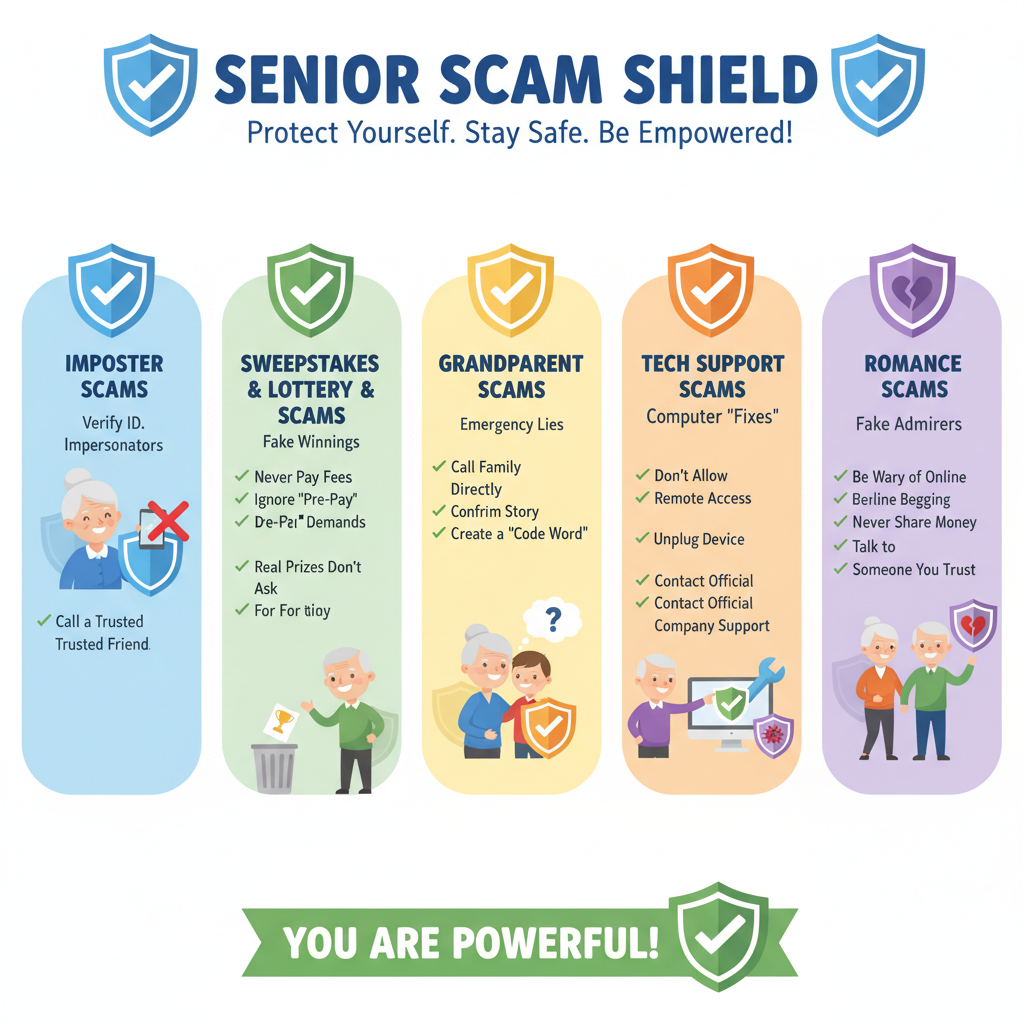
- Verify, Don't Trust: If you receive a suspicious call or message, hang up or delete it. Look up the official contact number for the organization (IRS, Social Security, your bank, utility company) and call them directly to verify.
- Never Share Personal Info: Legitimate organizations will not ask for sensitive information like your SSN, bank details, or passwords over the phone or email.
- Resist Pressure: Don't let anyone rush you into making a decision. Take time to think and consult a trusted family member or friend.
- Know Payment Rules: Government agencies and reputable companies do not demand payment via gift cards, wire transfers, or cryptocurrency.
2. Tech Support Scams: The Digital Deception
What This Scam Is
Tech support scams involve criminals pretending to be technical support representatives from well-known companies (like Microsoft, Apple, Norton, or your internet provider). Their goal is to gain remote access to your computer, install malicious software, steal your personal information, or charge you for unnecessary "fixes."
How It Typically Works
- Pop-up Warnings: You might see a sudden, alarming pop-up message on your computer screen claiming your device is infected with viruses or has a serious security issue. It often includes a toll-free number to call for "immediate assistance."
- Cold Calls: You receive an unsolicited phone call from someone claiming to be from a tech company, informing you of a "problem" with your computer.
- Email Phishing: You get an email disguised as a security alert from a tech company, prompting you to click a link or call a number.
Once you connect with the scammer, they'll try to convince you to:
- Grant them remote access to your computer.
- Purchase expensive and unnecessary software or services.
- Provide your credit card information or bank details.
- Install malware that steals your information or locks your computer.
Warning Signs to Watch For
- Unsolicited Contact: You receive a call or pop-up message out of the blue about a computer problem you didn't initiate.
- Alarmist Language: Messages using dire warnings like "Your computer is severely infected!" or "Your data is at risk!"
- Requests for Remote Access: Asking to take control of your computer remotely.
- Demands for Payment: Insisting on payment for services or software, especially through unusual methods.
- Generic Company Names: They might claim to be from "Windows Support" or "Apple Security" rather than a specific, official department.
Real-World Example
- A senior's computer screen suddenly locks up with a pop-up saying, "Your computer has detected a serious virus! Call Microsoft Support at 1-800-XXX-XXXX immediately." The senior calls the number, and the scammer convinces them to allow remote access, then charges $500 for "virus removal" and installs spyware.
Steps to Protect Yourself
- Never Trust Pop-ups: Legitimate tech companies will never display pop-up warnings with phone numbers telling you to call them.
- Hang Up on Cold Calls: If someone calls claiming to be tech support, hang up.
- Don't Grant Remote Access: Never give an unsolicited caller remote access to your computer.
- Use Reputable Antivirus: Keep your computer's operating system and antivirus software up to date.
- Contact Companies Directly: If you suspect a real issue, contact the tech company using official contact information from their website or product packaging, not from a pop-up or email.
3. Grandparent Scams: Exploiting Love and Concern
What This Scam Is
The grandparent scam is a variation of the imposter scam, specifically designed to exploit a senior's love and concern for their grandchildren. The scammer pretends to be a grandchild (or sometimes another relative) in an urgent situation, needing money quickly and secretly.
How It Typically Works
- The "Emergency" Call/Text: You receive a call, text, or email from someone claiming to be your grandchild. They might say, "Hi Grandma, it's me! I'm in trouble!"
- A Story of Distress: The "grandchild" claims to be in an urgent situation: they've been arrested, are in a foreign country, need emergency medical treatment, or lost their wallet and need money for travel or bail.
- Plea for Secrecy: They often beg you not to tell their parents, citing embarrassment or a desire to handle it themselves. This is a key tactic to prevent you from verifying their story.
- Demand for Immediate Funds: They'll ask for money to be sent via wire transfer, gift cards, or cryptocurrency – methods that are hard to trace and recover.
Warning Signs to Watch For
- Unfamiliar Number: The call or text comes from an unknown number, with the excuse that they lost their phone.
- Urgency and Secrecy: Demands for immediate money and pleas to keep it a secret from other family members.
- Difficulty Identifying Themselves: They might avoid using your grandchild's name directly, hoping you'll say it first ("Is that you, [Grandchild's Name]?").
- Requests for Untraceable Payments: Asking for gift cards, wire transfers, or cryptocurrency.
- Emotional Manipulation: Playing on your love and concern to rush you into action.
Real-World Example
- A senior answers a phone call. The caller says, "Grandma, it's me! I'm in Mexico, and I was in an accident. I need $2,000 for bail, and please don't tell Mom and Dad, they'll be so mad." The senior, worried, wires the money.
Steps to Protect Yourself
- Verify the Story: If you receive such a call, always try to contact your grandchild or their parents directly using a known phone number.
- Ask Personal Questions: Ask a question only your real grandchild would know the answer to (e.g., "What was the name of your first pet?").
- Resist Pressure: Don't let urgency override your judgment. Take a moment to think.
- Discuss with Family: Talk to your family about this scam so everyone is aware and prepared.
- Never Wire Money or Buy Gift Cards: These are almost always signs of a scam.
4. Lottery, Sweepstakes, and Prize Scams: The Illusion of Easy Riches
What This Scam Is
These scams trick you into believing you've won a large sum of money or a fantastic prize (like a new car or vacation) but require you to pay an upfront fee to "release" your winnings. The prize, of course, never materializes.
How It Typically Works
- Notification of a "Win": You receive a letter, email, text, or phone call congratulating you on winning a lottery, sweepstakes, or prize you never entered.
- The Catch – An Upfront Fee: To claim your winnings, you're told you need to pay "taxes," "processing fees," "customs duties," or "insurance."
- Demands for Payment: They'll instruct you to send money via wire transfer, gift cards, or even provide your bank account details for direct deposit (which they then use to steal from you).
- Fake Documents: They might send official-looking certificates or checks to make the scam seem legitimate. The checks, however, will bounce after you've sent your "fees."
Warning Signs to Watch For
- You Didn't Enter: You can't win a lottery or sweepstakes you didn't enter.
- Upfront Fees: Legitimate lotteries or sweepstakes will never ask you to pay a fee to claim your winnings. Taxes are typically withheld from the prize money itself or paid directly to the government, not to the prize organizer.
- Unusual Payment Methods: Requests for payment via wire transfer, gift cards, or cryptocurrency.
- High-Pressure Tactics: Urging you to act quickly before the "prize expires."
- Contact from Unknown Entities: The notification comes from an unfamiliar company or individual.
Real-World Example
- A senior receives a letter informing them they've won $1 million in an international lottery. To claim the prize, they need to send $5,000 for "processing fees" via wire transfer. After sending the money, the "lottery company" disappears.
Steps to Protect Yourself
- If You Didn't Enter, You Didn't Win: This is the golden rule.
- Never Pay to Win: Legitimate prizes don't require an upfront payment.
- Don't Cash Suspicious Checks: If you receive a check with instructions to deposit it and then send back a portion for "fees," it's a fake. The check will bounce, and you'll be responsible for the money.
- Research the "Company": If you're unsure, search online for the company name plus "scam" or "review."
- Shred Suspicious Mail: Don't just throw it away; shred any official-looking scam mail to protect your information.
5. Romance Scams: The Heartbreaking Deception
What This Scam Is
Romance scams, also known as "catfishing," involve criminals creating fake online identities to gain a victim's affection and trust. Once they have an emotional connection, they manipulate the victim into sending money. These scams often target lonely or vulnerable individuals.
How It Typically Works
- Online Connection: The scammer contacts you through dating apps, social media, or even email. They often claim to be from another country, working in a high-paying job (like military, oil rig worker, doctor), which explains why they can't meet in person.
- Building a Relationship: They spend weeks or months building a strong emotional connection, showering you with attention, compliments, and promises of a future together. They might send fake photos.
- The "Emergency" Request: Once they've established trust, they suddenly have an "emergency" that requires money: a medical crisis, a business opportunity gone wrong, travel expenses to finally meet you, or needing help to pay for a child's education.
- Demands for Money: They'll ask for money via wire transfer, gift cards, or cryptocurrency, always with a compelling, emotional story. They might even ask you to open a new bank account or credit card in your name for them.
Warning Signs to Watch For
- Too Good to Be True: They are often exceptionally attractive, charming, and seem "perfect" in every way.
- Quick Declaration of Love: They express strong feelings very early in the relationship.
- Can't Meet in Person: They always have an excuse for why they can't meet, talk on video calls, or even speak on the phone regularly.
- Requests for Money: Any request for money, no matter how small or urgent the reason, is a major red flag.
- Secrecy: They might ask you to keep your relationship a secret from friends and family.
- Poor Grammar/Spelling: Despite claiming a high-profile job, their written communication might have noticeable errors.
Real-World Example
- A senior woman meets a man online who claims to be a charming, wealthy engineer working overseas. After months of daily messages and declarations of love, he says he needs $10,000 for emergency medical treatment for his child. The woman, emotionally invested, sends the money. He then disappears.
Steps to Protect Yourself
- Be Skeptical of Online Strangers: Be cautious about who you connect with online, especially if they quickly express strong feelings.
- Never Send Money: Never send money, gift cards, or personal financial information to someone you've only met online, no matter how convincing their story.
- Verify Identity: Do a reverse image search of their profile picture. Scammers often use stock photos or pictures stolen from legitimate people.
- Talk to Trusted Friends/Family: Share details of your online relationships with people you trust. An outside perspective can help you see red flags.
- Don't Share Too Much: Be careful about how much personal information you share online.
Steps to Protect Yourself from All Scams
Beyond the specific advice for each scam, here are universal protection strategies:
- Be Skeptical: If something sounds too good to be true, or too bad to be true, it probably is.
- Verify Everything: Don't trust unsolicited calls, emails, or texts. Always verify information using official, independently obtained contact details.
- Never Share Personal Information: Your Social Security number, bank account details, credit card numbers, and passwords should never be given out unless you initiated the contact and are certain of the recipient's legitimacy.
- Resist Pressure: Scammers thrive on urgency. Legitimate organizations will give you time to make decisions.
- Use Strong Passwords and Two-Factor Authentication: Protect your online accounts.
- Update Software: Keep your computer and mobile device software up to date to patch security vulnerabilities.
- Talk to Someone You Trust: Before making any significant financial decision or responding to an urgent request, discuss it with a trusted family member, friend, or financial advisor.
- Shred Documents: Properly dispose of documents containing personal information.
- Monitor Your Accounts: Regularly check your bank and credit card statements for suspicious activity. Consider getting a credit monitoring service.
- Educate Yourself: Stay informed about new scam tactics.
What to Do If You've Been Scammed
If you suspect you've fallen victim to a scam, it's crucial to act quickly. Don't be embarrassed – scammers are sophisticated, and you are not alone.
- Stop All Contact: Immediately cease all communication with the scammer.
- Report to Your Bank/Financial Institution: If you sent money via bank transfer, credit card, or debit card, contact your bank immediately. They may be able to stop the transaction or reverse the charges.
- Report to the Gift Card Company: If you paid with gift cards, call the gift card company (e.g., Apple, Google Play, Amazon) right away and explain you were scammed.
- Report to Law Enforcement: File a report with your local police department. While they may not always recover your money, your report helps track criminal activity.
- Report to Government Agencies:
- Federal Trade Commission (FTC): Report scams at reportfraud.ftc.gov or call 1-877-FTC-HELP.
- FBI's Internet Crime Complaint Center (IC3): For online scams, file a report at ic3.gov.
- Social Security Administration (SSA) Office of the Inspector General: For SSA imposter scams, report at oig.ssa.gov.
- IRS Treasury Inspector General for Tax Administration (TIGTA): For IRS imposter scams, report at tigta.gov.
- Protect Your Identity: If you shared personal information, consider placing a fraud alert or freezing your credit with the three major credit bureaus (Equifax, Experian, TransUnion).
- Change Passwords: If you believe any accounts were compromised, change your passwords immediately.
Conclusion
Scammers are constantly evolving their tactics, but their core methods remain the same: preying on trust, urgency, and emotion. By understanding these common scams and adopting a healthy dose of skepticism, you can significantly reduce your risk of becoming a victim. Share this information with your friends and family. Your awareness is the best defense against these predatory schemes. Stay safe, stay informed!
(Keywords for SEO: senior scams, elder fraud, protect seniors, imposter scams, tech support scams, grandparent scams, lottery scams, romance scams, scam prevention, senior safety, financial fraud, identity theft, how to report a scam)
Share This Important Information
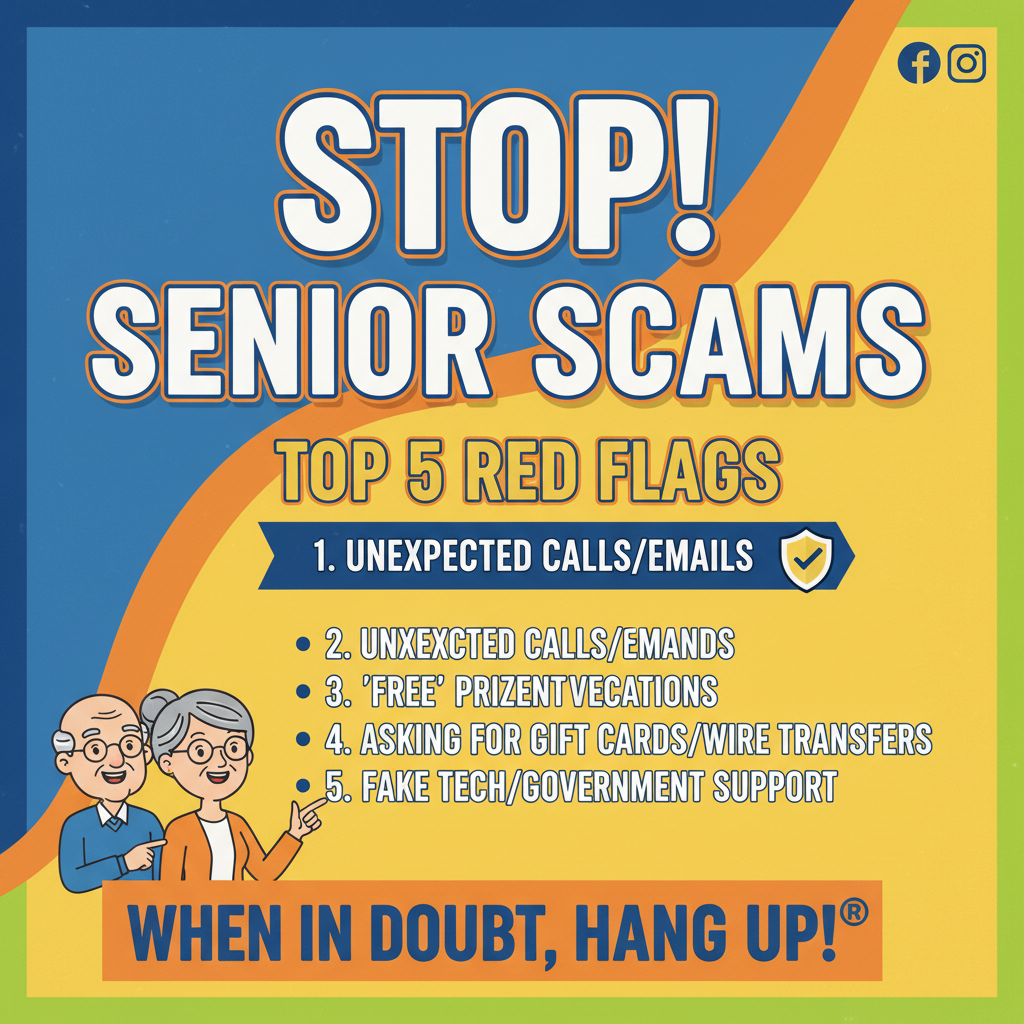
Know someone who should read this? Share this article with friends and family on Facebook and Instagram to help protect your community from Top 5 Senior Scams .
Together, we can protect our seniors from scams.
Community Discussion
No comments yet. Be the first to share your thoughts!